
South Africa's Credit Guarantee Vehicle Is Now the Missing Bankability Link Every C&I Wheeling Buyer Must Price Into Long-Term PPAs: What the Mid-2026 CGV Launch, Its National Treasury Seed Capital, and the Seven Pre-Qualified ITP Consortia Mean for Transmission Risk Allocation, Project Finance Tenor, and Private-Wire Contract Structuring
South Africa's Credit Guarantee Vehicle — backed by a USD 500 million capital base and National Treasury seed equity — is targeting operational launch in H2 2026, directly tied to the first seven pre-qualified Independent Transmission Project consortia. Here's what it means for wheeling PPAs, project finance tenor, and C&I solar bankability.
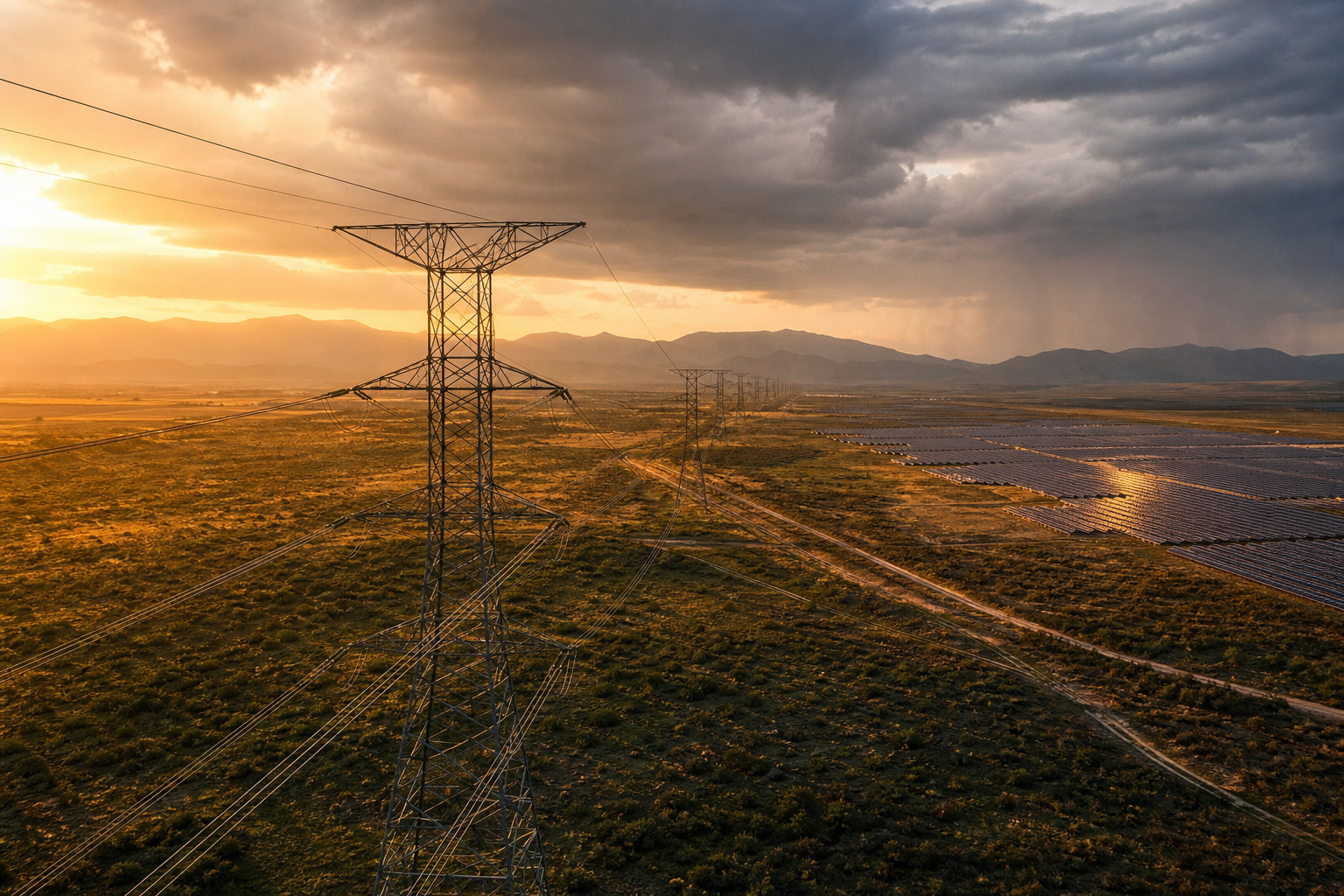
South Africa's Credit Guarantee Vehicle Is the Missing Bankability Link Every C&I Wheeling Buyer Must Price Into Long-Term PPAs
South Africa's energy finance landscape shifted materially in mid-2026 with the imminent operational launch of the Credit Guarantee Vehicle (CGV) — a blended-finance instrument that is now the linchpin connecting private transmission investment, bankable power purchase agreements (PPAs), and long-tenor project finance. For commercial property owners buying electricity through wheeling arrangements, the CGV is no longer a policy abstraction: it is a structural variable that must be priced into every long-term PPA signed from this point forward.
What Is the CGV, and Who Is Behind It?
The Credit Guarantee Vehicle is an instrument for unlocking private investment in South Africa's infrastructure, and is a new, privately run entity being established by government and development partners — including the World Bank Group — to de-risk private investment in resilient infrastructure.
It will be established as an independent, privately governed non-life insurance company that issues payment and termination guarantees to project companies. National Treasury holds a minority stake via seed equity and junior capital.
Following World Bank Board approval on 5 March 2026, National Treasury statements indicate that the CGV is being readied with an initial capital base in the region of USD 500 million (approximately ZAR 9 billion), scaling toward a multi-year target of approximately USD 2.5 billion. The remaining portion of the initial capital — USD 400 million — is expected to be subscribed by domestic, regional, and international development financial institutions (DFIs), including potentially the International Finance Corporation. Other prospective DFIs include the African Development Bank, Germany's KfW, and South Africa's Industrial Development Corporation.
The government's first-loss capital contribution of approximately $100 million (R1.8 billion) has been included in the Medium-Term Budget Policy Statement for 2026/2027 and is structured to crowd in additional funding from development partners by absorbing initial risks.
The CGV's First Mission: The Independent Transmission Programme
The CGV will first be deployed in the Independent Transmission Programme (ITP), which aims to build 14,000 km of new power transmission lines over the next ten years. The full programme is estimated to cost R440 billion over this period.
Electricity and Energy Minister Kgosientso Ramokgopa announced seven pre-qualified bidders for the initial R17 billion, 1,064-kilometre phase of the transmission development programme, selected from 17 respondents to the prequalification process.
The seven pre-qualified ITP consortia are:
- Adani Power Middle East–Momentous Energy Consortium
- AREF Cobra Transmission Consortium
- Consortium Pulse Infrastructure
- EITP Consortium
- State Grid Consortium
- The Hyperion Consortium
- Transmission One Consortium
The request for proposals (RFP) for the initial ITP projects has been deliberately delayed to coincide with the launch of the CGV, which will enable the projects to proceed in the absence of National Treasury guarantees. By aligning the ITP and CGV timelines, government is acting decisively to ensure this first-of-its-kind programme is technically sound, commercially bankable, and institutionally aligned — with sequencing critical to ensuring that bidders and lenders have full clarity on the guarantee framework underpinning financial close.
What This Means for Project Finance Tenor and PPA Structuring
The CGV is structured to provide credit enhancement without direct sovereign guarantees, leveraging development finance, multilateral capital, political-risk insurance, and grant funding to strengthen the credit profile of ITP concessions — reducing early-stage risk and supporting institutional investors requiring predictable, investment-grade returns.
In effect, South Africa's transmission financing architecture is shifting from sovereign-supported utility borrowing to concession-based project finance underpinned by targeted credit enhancement. For commercial and industrial (C&I) energy buyers, this is consequential: it means that the grid backbone undergirding wheeling PPAs will increasingly be financed by private capital on longer tenors — but only where CGV guarantee coverage is confirmed.
The CGV initiative includes an initial capitalisation of about $500 million (R8 billion). This credit enhancement allows lenders to extend financing on better terms — lower interest rates, longer tenures and reduced security requirements — and is expected to accelerate financial close of projects.
The CGV also fundamentally converts emerging-market sovereign risk into multilateral development bank (MDB) exposure for regulatory capital purposes — altering the economics of bank participation by shifting risk weights and relieving large exposure constraints that currently bind international balance sheets.
Implications for Commercial Property Owners and C&I Wheeling Buyers
The CGV's launch has three direct consequences for any business currently negotiating or renewing a wheeling-based PPA or evaluating a funded solar or BESS project:
- Transmission risk is now priceable. The CGV is designed to improve bankability for large-scale transmission investment and is essential for private-sector participation in the Transmission Development Plan (TDP). C&I buyers structuring long-dated PPAs should now include transmission guarantee coverage as a bankability condition.
- Longer debt tenors become viable. The credit backstop provided by the CGV will allow lenders to consider projects that previously sat just outside risk parameters — particularly greenfield clean energy and transmission projects — and should improve risk-adjusted returns by reducing both the probability of default and the loss-given-default, enabling more efficient credit pricing.
- Grid congestion risk must still be priced in. Several regulatory instruments critical to full bankability remain outstanding or in development, including the migration of the transmission licence from Eskom to the new TSO, and the finalisation of grid and market codes governing wheeling, congestion management, and loss allocation. Until these are resolved, private-wire and wheeling contract structuring must account for residual grid uncertainty.
The SolarXgen Perspective
For C&I energy buyers procuring solar PV or BESS capacity under funded PPAs, the CGV changes the risk calculus on the transmission layer of any wheeling deal. Where developers previously had to absorb or pass through sovereign and grid risk in pricing, the CGV creates a new instrument to explicitly allocate, insure, and price transmission risk — making 15- to 20-year wheeling PPAs materially more bankable. Commercial property owners should be asking their solar and BESS developers, starting today, whether CGV coverage is built into the bankability structure of their proposed contracts.
Sources & References
- World Bank Press Release: World Bank Backs South Africa's Credit Guarantee Vehicle (5 March 2026)
- World Bank Factsheet: South Africa's Credit Guarantee Vehicle (5 March 2026)
- Times Live: CGV Set to Be In Place in Latter 2026, Says Godongwana (23 March 2026)
- Cape Business News: Credit Guarantee Vehicle to Unlock Jobs and Infrastructure Investment (19 April 2026)
- ENSafrica: How South Africa's Credit Guarantee Vehicle Can Rewire Bank Capital (April 2026)
- Polity.org.za: World Bank Confirms $350m Funding for CGV (9 March 2026)
- Daily Friend Africa: Seven Consortia Prequalify for ITP First Phase (16 December 2025)
- Pinsent Masons: South Africa Accelerates Expansion of Electricity Transmission Programme (31 March 2026)
- Fairbridges Attorneys: From Eskom Blues to Infrastructure Gold (18 February 2026)
- South African Business Matters: How SA's New CGV Could Unlock Private Infrastructure Capital (13 April 2026)
- SAnews: Government Reaffirms Commitment to Independent Transmission Programme (November 2025)
- JUWI: 2026 — Five Developments We Will Be Watching in South Africa's Electricity Market
- Mail & Guardian: Infrastructure Credit Guarantee Scheme to Unlock Billions (28 March 2026)