South Africa's Government Pivot to Selling Surplus Wind Capacity to SADC Neighbours Is Now the Cross-Border Wheeling Wildcard Every C&I Buyer Must Price Into Long-Tenor PPA Risk Models Before Locking In Northern Cape Supply Contracts: What a Windaba 2026 Export-Exploration Pledge, a Structurally Oversupplied Midday Grid, and Zero Firm Regional Offtake Agreements Mean for Domestic Curtailment Frequency, Behind-the-Meter Displacement Ratios, and PPA Delivery Certainty in Q4 2026
South Africa's government pledged at Windaba 2026 to explore selling surplus wind capacity to SADC neighbours — but with no firm offtake agreements signed and curtailment instructions hitting historic highs, C&I buyers must urgently price this cross-border wildcard into Northern Cape PPA risk models before locking in Q4 2026 supply contracts.
SA's SADC Export Pivot Is Now a PPA Risk Variable C&I Buyers Cannot Ignore
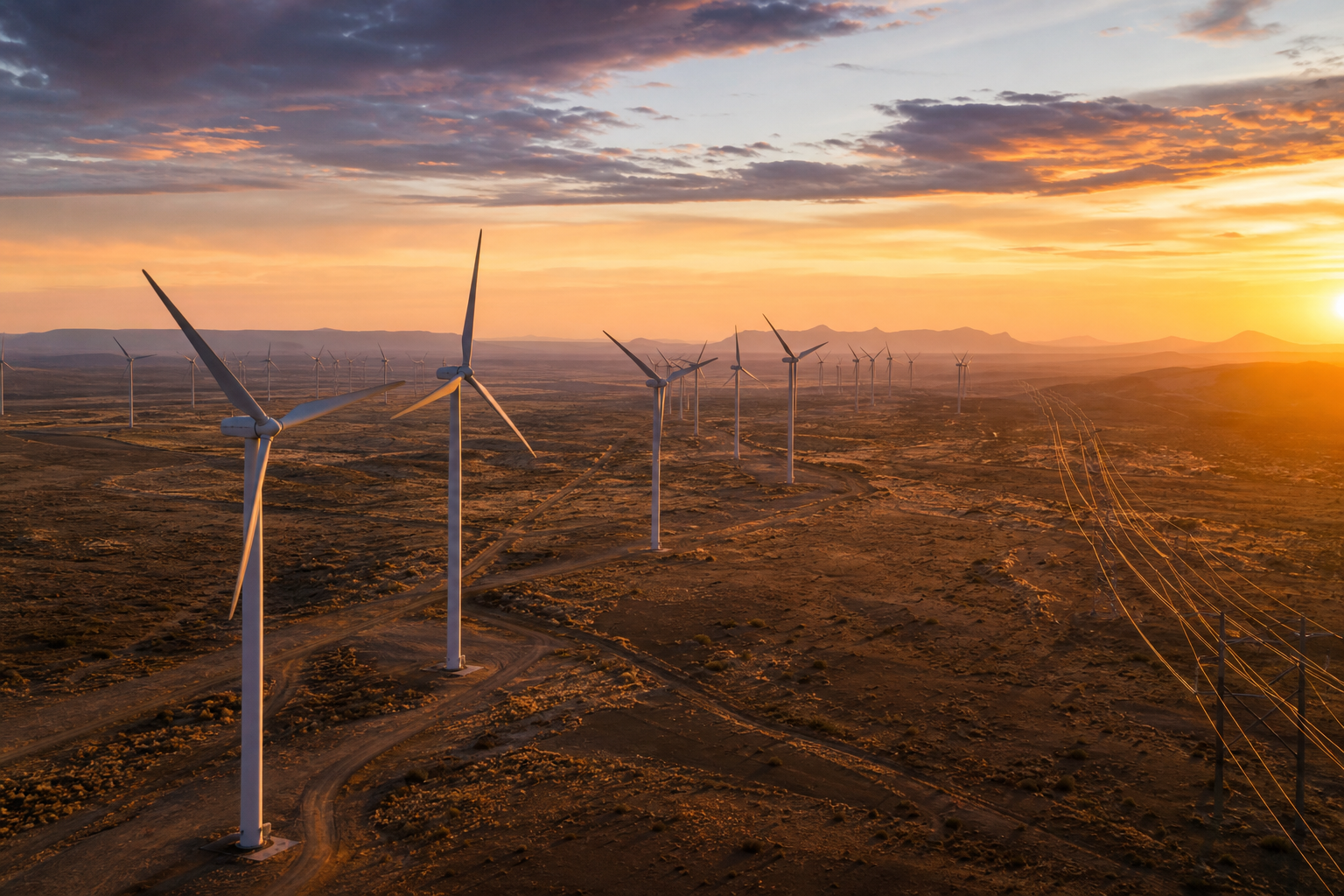
A single announcement at Windaba 2026 has reframed the risk calculus for every commercial and industrial (C&I) energy buyer currently negotiating a long-tenor power purchase agreement (PPA) sourced from South Africa's renewable-rich Northern and Western Cape regions. At Africa's premier wind energy conference, held in Cape Town on 6–7 October 2026, Electricity and Energy Minister Kgosientsho Ramokgopa announced that the government is exploring selling South Africa's excess wind generation capacity to regional neighbours and procuring battery storage technologies to support the national grid and address the issue of curtailment. For C&I buyers, that exploration creates a new and as-yet unpriced risk dimension in any supply contract signed before firm regional offtake agreements are in place.
The Curtailment Crisis Behind the Announcement
The minister's SADC export ambition is a direct response to a structurally oversupplied midday grid that has escalated dramatically in 2026. Eskom's generation recovery, combined with rapid growth in private solar and wind generation, has created a daytime surplus averaging more than 4 GW, forcing grid operators to curtail generators — with curtailment reaching up to 3,000 MW in a single day during winter 2026 and becoming a near-daily occurrence. Curtailment instructions to independent power producers rose from roughly 100 a month to more than 1,000 a month during 2026.
The financial consequences are stark. Minister Ramokgopa stated that South Africa is "losing potential revenue of close to R49-billion per annum" through curtailment. In response, the government is looking at exporting excess wind generation capacity to the SADC and the continent, as well as accelerating the provision of 4.6 GW of battery storage.
Why "Exploration" Is Not a Firm Offtake Agreement
The critical word in Ramokgopa's pledge is exploring. As of Q4 2026, no firm cross-border offtake agreement with any SADC member state has been signed or gazetted. The infrastructure reality reinforces the gap: even if South Africa were generating surplus capacity and a neighbour such as Zambia needed it, existing transmission infrastructure does not yet have the capacity to move power efficiently at scale across the border. Wind energy projects on the continent face a common constraint — the electricity grid — and transmission capacity is becoming a limiting factor in some of the strongest markets, with South Africa being a clear example: a project can have the best wind resources, a buyer and financing in place, but be unable to proceed due to grid constraints.
Until physical interconnectors are upgraded and sovereign offtake agreements are signed, surplus wind generation cannot reliably flow north. That means domestic curtailment pressure will persist — and quite possibly intensify as more capacity comes online.
The Northern Cape Grid Crunch and PPA Delivery Risk
South Africa has far more renewable projects under development than the grid can currently connect, with GreenCape reporting a pipeline above 217 GW, and fully allocated capacity in key renewable regions including the Northern Cape for solar and the Western and Eastern Cape for wind. In the regions that are best for renewable energy — the sunny Northern Cape for solar and the Eastern and Western Cape for wind — there is next to no capacity left on the grid.
This grid saturation directly erodes PPA delivery certainty. South Africa's independent power producers face a regulatory gap: private wheeling deals that sell renewable power directly to buyers like data centres have no guaranteed compensation when the grid operator curtails generation due to oversupply, unlike state-procured projects which receive deemed energy payments. A regulatory mechanism approved for 2025–2028 covers congestion-related curtailment but explicitly excludes oversupply curtailment, leaving compensation to bilateral contracts between IPPs and off-takers.
This is a material drafting risk for C&I buyers: an oversupply curtailment event reduces the kilowatt-hours delivered under a PPA with no automatic make-whole mechanism. Behind-the-meter (BTM) displacement ratios drop in lockstep with every curtailment instruction, directly inflating the grid-energy top-up bill that commercial property owners pay.
BESS: The Policy Lever and the Bankability Bridge
Energy Minister Ramokgopa has announced a 9.6 GW determination for new generation capacity split between 4.6 GW of battery storage and 5 GW of gas-fired power, with no new wind or solar in this round. Likely investment is estimated above R90-billion, nearly nine times the 513 MW procured in the first battery bid window. The Acting Deputy Director-General in the Department of Electricity and Energy noted that procurement design needs to address curtailment directly as renewable energy penetration increases, potentially requiring future projects to co-locate with energy storage.
For funded solar and BESS projects in the C&I segment, co-location requirements could tighten bankability criteria and alter project economics significantly — particularly for developers and buyers seeking to lock in Northern Cape supply contracts under long-tenor PPAs of 10–20 years.
Implications for Commercial Property Owners and C&I Buyers
- Curtailment clauses must be explicit. Any Northern Cape or Western Cape PPA signed in Q4 2026 must clearly define whether oversupply curtailment — not just congestion curtailment — triggers a deemed-energy or force-majeure payment obligation on the seller. Leaving this ambiguous is a material financial exposure.
- BTM displacement ratios are not guaranteed. If oversupply curtailment reaches wheeling deals, buyers would see reduced renewable energy credits, and behind-the-meter batteries are floated as a partial mitigation, though they cannot recover power lost at the generator. Buyers must model realistic displacement ratios under curtailment scenarios, not nameplate assumptions.
- SADC export timelines are uncertain. While Minister Ramokgopa outlined the government's intention to sell surplus power to regional neighbours, he also committed to expanding transmission infrastructure to accommodate new generation capacity — a process that will take years, not months. Do not price a curtailment relief scenario into a 2026 PPA on the basis of the Windaba pledge alone.
- Co-located BESS is becoming a competitive differentiator. Proposed solutions include accelerating utility-scale battery storage deployment to absorb midday excess and discharge it during evening peak periods, wheeling surplus renewable power into neighbouring countries, and moving customers towards dynamic time-of-use pricing to incentivise higher power consumption during midday periods. Projects with on-site BESS will offer greater delivery certainty and a stronger hedge against future curtailment exposure.
- Trader-led wheeling structures add flexibility. South Africa's renewable-energy market is entering a decisive new phase in 2026, shaped by electricity reform, tightening grid capacity and changing project economics — with trader-led wheeling models rapidly emerging as the principal commercial structure for large power users. C&I buyers should evaluate aggregated, trader-facilitated structures that allow portfolio diversification across generation zones.
The Bottom Line
The government's Windaba 2026 export-exploration pledge is a genuine policy signal, but it is not a short-term relief valve for domestic curtailment. With zero firm SADC offtake agreements in place, cross-border wheeling remains a medium-term aspiration constrained by transmission infrastructure that will take years to build. In the interim, the Northern Cape and Cape corridor grids remain structurally oversupplied at midday, curtailment instructions are running at historic highs, and the compensation framework for private wheeling deals still has a critical gap. C&I buyers who lock in long-tenor Northern Cape supply contracts without pricing these variables into their risk models are accepting a delivery-certainty shortfall that no amount of name-plate capacity can fix.
SolarXgen advises all C&I clients to conduct curtailment scenario modelling and BESS co-location analysis before executing any PPA with a Northern Cape or Western Cape wind/solar generator in Q4 2026 or Q1 2027.
Sources & References
- Engineering News — Windaba 2026 kicks off with firm pledges to address curtailment (7 October 2026)
- ESI Africa — Africa's rich wind energy potential takes centre stage at Windaba 2026 (14 October 2026)
- Farmers Weekly — Corporate deals power SA's wind-energy investment (9 October 2026)
- Enerthia Energy — Grid Access South Africa: The 4% Curtailment Trade-Off (October 2026)
- Daily.dev — South Africa's midday power glut is a hidden risk for wheeling deals (October 2026)
- Daily.dev — The giant batteries coming to South Africa's grid (October 2026)
- CNBC Africa — Africa's energy transition has a grid problem (2026)
- Mining Weekly — Trader-led wheeling to play big role in SA's renewable power market in 2026 (February 2026)
- Solarplaza — Renewable Energy Trading in South Africa (White Paper, 2026)
- CNBC Africa — South Africa bets on renewables, but its power grid is not ready (2026)